THE ESSENTIAL
To answer how often should you water houseplants, the rule of thumb is to ignore the calendar and only water when the top two inches of soil feel dry.
- Overwatering is the number one cause of houseplant death, as soggy soil suffocates roots.
- Active growth in spring and summer requires watering every three to seven days, while winter dormancy drops this to once every two to four weeks.
- Most plants prefer water at a room temperature of 20°C to 22°C to avoid shocking the root system.
The ideal frequency ultimately depends on your home’s unique light levels, humidity, and the specific plant species.
How Often Should You Water Houseplants?
There is no single calendar schedule that works for every indoor setup. Instead of watering on a set day every week, you should let the moisture level of the soil guide your routine. Most indoor varieties require watering once every seven to ten days during their active growing season.
According to the Oregon State University Extension Service, overwatering is far more common and damaging than underwatering. This occurs because waterlogged soil drives out oxygen, which suffocates the root system. To keep your green space healthy, you must treat each plant as an individual with its own seasonal rhythm.
Factors That Change How Often Your Plants Need Water
Several environmental conditions dictate how fast the potting mix dries out. Adjusting your care routine based on these variables prevents common watering mistakes. The type of soil mix you use also plays a massive role in moisture retention.
Sandy soils drain in a flash, whereas heavy clay-based soils hold onto water for days. Adding ingredients like perlite or vermiculite can dramatically improve drainage and aeration. Keep the following environmental factors in mind as you assess your collection:
- Light Exposure: Plants in bright, direct sunlight photosynthesize rapidly and dry out within three to five days, whereas those in low-light corners can go two to three weeks between waterings.
- Seasonal Growth: Active growth during spring and summer demands frequent hydration, but you should cut back significantly during the winter dormancy period.
- Pot Material and Size: Terracotta pots are porous and wick moisture away quickly, requiring more frequent watering than non-porous plastic or ceramic containers.
- Humidity and Temperature: High indoor temperatures and dry air from winter heating speed up evaporation, forcing you to water more regularly.
How to Test If Your Plant Needs Water
Before grabbing your watering can, you should always verify the moisture level of the potting mix. Relying on visual cues alone can be misleading since dry surface soil often hides dampness near the roots. Testing the soil directly is the most reliable way to avoid accidental overwatering.
The simplest method is the finger test, where you insert your index finger up to the second knuckle into the soil. If the top five centimetres feel dry, your plant is ready for a drink. This simple test prevents root rot by ensuring the root zone has had time to breathe.
For larger containers, you can gauge moisture by lifting the pot to feel its weight. A lightweight pot indicates dry soil, while a heavy pot shows that water is still stored deep inside. You can also use a budget-friendly moisture meter inserted into the root zone, which rates soil moisture on a scale of one to ten.
How to Water Your Houseplants Correctly
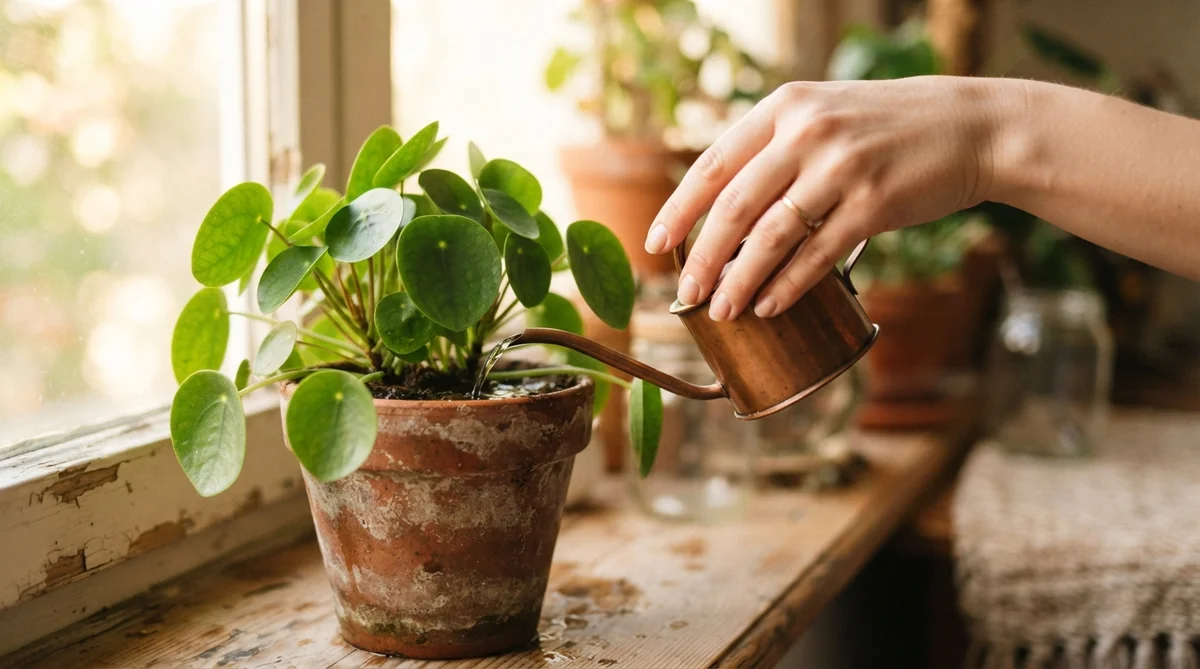
The way you apply water is just as important as how often you do it. You should always water the soil directly rather than wetting the foliage, which can encourage fungal diseases. Wet leaves can quickly become a breeding ground for pests and unsightly leaf spots.
Using water that is too hot or cold can shock the delicate root system of your houseplants. Always use water that is at room temperature, ideally between 20°C and 22°C. If you live in an area with hard tap water, consider using filtered water or rainwater for sensitive species.
Pour water evenly over the soil surface until it drains out of the holes at the bottom of the pot. Let the container sit in the run-off for about 15 minutes so the roots can drink, then empty the saucer. Leaving your plant in standing water for hours leads to root rot, a silent killer of indoor greenery. If you have chlorinated tap water, the University of Maryland Extension suggests letting it sit in an open container for 24 hours before use so chemicals can dissipate safely.
When Is the Best Time of Day to Water?
The absolute best time to water your indoor plants is early morning. This timing aligns with the natural circadian rhythm of the plant as it prepares for a day of photosynthesis. Morning hydration allows the plant to absorb moisture before the midday heat increases evaporation rates.
It also ensures that any accidental splashes on the leaves dry quickly in the daytime light. Watering late at night keeps the soil damp and cold for several hours, creating a perfect environment for root pathogens. If you miss the morning window, waiting until the next day is often safer than a late-night soaking.
Signs of Overwatering and How to Save Your Plant
Recognizing the early warning signs of excess moisture can mean the difference between life and death for your plants. Soggy conditions rot the root tissue, preventing it from taking up nutrients. If you notice these symptoms, you must act quickly to dry out the soil:
- Yellow, limp leaves that feel soft and mushy to the touch.
- Mould or fungus growing on the soil surface, accompanied by a sour, musty smell.
- Fungus gnats hovering around the damp soil where they lay their eggs.
- Leaf drop where both old and new leaves fall off without drying out first.
To save an overwatered plant, slip it out of its pot and inspect the roots. Snip away any mushy, black roots with sterilized shears, then repot the plant in fresh, dry potting soil with excellent drainage. Hold off on watering for several days until the plant begins to stabilize.
Signs of Underwatering and How to Revive Your Plant
Underwatered plants are much easier to rescue than those suffering from root rot. When soil becomes too dry, the plant loses its structural turgor pressure and begins to wilt. Watch out for these common indicators of dehydration:
- Crispy, brown leaf tips or dry patches on the foliage.
- Drooping stems that look completely lifeless but remain dry rather than mushy.
- Soil pulling away from the inside edges of the pot, leaving a visible gap.
- Slow growth and dry, dusty soil that resists absorbing water.
To revive a severely dehydrated plant, use the bottom-watering method. Place the pot in a basin filled with five to ten centimetres of lukewarm water for 30 minutes until the soil is thoroughly saturated, then let it drain completely. This allows the dry peat and soil to rehydrate evenly without water simply running down the sides of the pot.