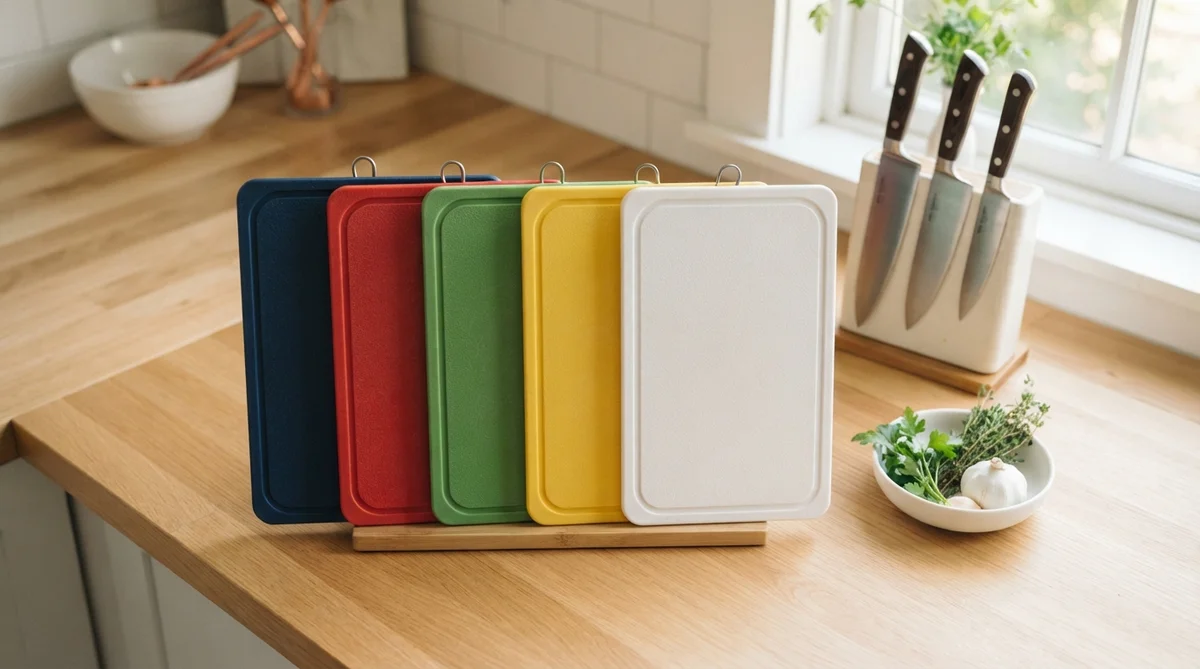
AT A GLANCE
Assigning specific board colors to distinct food groups prevents dangerous bacterial transfer and keeps kitchen workflows organized. Following this cutting board color chart guide helps eliminate cross-contamination between raw meats, fresh produce, and cooked items in both home and commercial kitchens.
- 6 primary colors define the standard kitchen color-coding system to segregate raw proteins, dairy, produce, and cooked items.
- 1 purple board is reserved exclusively for allergen-free prep to avoid severe cross-contact risks.
- 165°F (74°C) is the target cooking temperature required for raw poultry, which is why yellow boards keep chicken separate from beef cooked to 145°F (63°C).
- 140°F (60°C) hot soapy water washing combined with chemical sanitizing is required after every use regardless of board color.
Color coding separates food groups effectively, but thorough sanitation between tasks remains essential to maintain complete food safety.
Standard Cutting Board Color Chart Guide
Commercial kitchens and safety regulators rely on a standardized color system to simplify food preparation hygiene. The chart below details the core color assignments, target biological hazards, and intended food categories for each board type.
| Board Color | Food Category | Target Hazards | Primary Kitchen Use |
|---|---|---|---|
| Red | Raw Red Meat | Salmonella, E. coli | Beef, pork, lamb, and raw game |
| Yellow | Raw Poultry | Campylobacter, Salmonella | Chicken, turkey, and duck |
| Blue | Raw Seafood | Vibrio, histamine | Raw fish, shellfish, and crustaceans |
| Green | Produce & Herbs | Norovirus, Listeria | Fresh fruits, vegetables, and leafy greens |
| White | Dairy & Ready-to-Eat | Listeria, cross-contact | Cheese, bread, pastries, and deli items |
| Brown | Cooked Meats | Cross-contamination | Carving roasted meats and cooked poultry |
| Purple | Allergen-Free Prep | Major food allergens | Gluten-free, nut-free, and soy-free food prep |
Red Cutting Board: Raw Red Meat
Red cutting boards are designated exclusively for handling raw red meat such as beef, pork, and lamb. Raw livestock meat carries harmful bacteria including Escherichia coli and Salmonella that spread easily onto knife blades and countertops. Keeping raw red meat on a dedicated red board prevents juices from touching ingredients that will not be cooked further.
After trimming or slicing raw steak and chops, scrub the red board thoroughly with detergent before sanitizing. The U.S. Department of Agriculture (USDA) recommends cooking intact beef steaks to an internal temperature of 145°F (63°C), but keeping raw juices isolated before cooking is your first line of defense.
Yellow Cutting Board: Raw Poultry
Yellow cutting boards are reserved strictly for raw chicken, turkey, duck, and other fowl. Poultry carries high rates of Campylobacter and Salmonella, which present severe foodborne illness risks if transferred to uncooked foods. The USDA mandates cooking raw poultry to a minimum internal temperature of 165°F (74°C) to neutralize pathogens.
Because poultry requires higher cooking temperatures than red meat, keeping chicken on a separate yellow board prevents cross-species bacterial transfer. Never place cooked chicken or fresh salad greens on a yellow board that held raw chicken pieces.
Blue Cutting Board: Raw Fish and Seafood
Blue cutting boards are used solely for preparing raw fish, shellfish, and other seafood. Raw seafood poses unique risks such as Vibrio vulnificus bacteria and histamine toxicity from improper temperature control. Seafood also leaves strong odors and oily residues that taint non-seafood ingredients like cheese or bread.
Using a blue board keeps fish scales and seafood proteins contained to a single surface. Wash blue boards immediately after filleting fish to stop fishy oils from penetrating poly board surfaces.
Green Cutting Board: Fruits, Vegetables, and Fresh Herbs
Green cutting boards serve as the dedicated station for raw fruits, fresh vegetables, and leafy green herbs. Because produce is frequently consumed raw in salads and garnishes, any bacterial contamination on a green board bypasses the kill-step of heat cooking. Research from university extension services highlights that washed produce still picks up pathogens if placed on boards previously exposed to raw meat.
Using different cutting boards for meat and veggies is vital for maintaining high hygiene standards. Keep green boards free from oil or grease by washing them thoroughly after prepping citrus or starchy roots like potatoes.
White Cutting Board: Dairy, Bread, and Ready-to-Eat Foods
White cutting boards are designed for ready-to-eat foods including block cheeses, sandwich breads, pastries, and deli meats. These items undergo no further cooking prior to serving, making surface cleanliness essential. White boards highlight stray food particles quickly, making visual cleanliness inspections simple during busy prep shifts.
Store white boards away from meat preparation sinks to avoid splash contamination. Using a clean white board ensures baked goods and dairy maintain their delicate flavors without absorbing foreign odors.
Brown Cutting Board: Cooked Meats
Brown cutting boards are reserved for slicing and carving fully cooked meats such as roast beef, grilled pork tenderloin, or rotisserie chicken. Once meat completes cooking and reaches safe internal temperatures, placing it back on a board used for raw meat reintroduces live bacteria. A brown board acts as a safe landing zone for resting and carving hot roasts.
Keep brown boards near your carving station or pass-through area. Sanitize brown boards routinely between carving different batches of cooked roasts to ensure ready-to-serve meats remain uncontaminated.
Purple Cutting Board: Allergen-Free Food Prep
Purple cutting boards represent the universal standard for allergen-free food preparation. Commercial food service kitchens adopt purple boards to prepare meals for diners with severe sensitivities to peanuts, tree nuts, shellfish, soy, wheat, or dairy. Cross-contact occurs when tiny protein traces transfer from allergen-containing foods to safe meals.
Designate dedicated knives and purple utensils alongside your purple board. Wash and store purple prep tools in separate cabinets to prevent airborne flour or food dust from settling on allergen-safe surfaces.
How Color Coding Prevents Kitchen Cross-Contamination
Implementing a strict cutting board color code food safety system eliminates guesswork for cook staff and home meal preparers alike. Segregating kitchen tools stops dangerous pathogens from migrating across prep stations. Following basic kitchen cutting board rules creates structural barriers against foodborne outbreaks.
- Isolates Biological Hazards: Restricting raw poultry and meat juices to specific color boards stops bacteria like Salmonella from reaching fresh salads.
- Prevents Allergen Cross-Contact: Using distinct purple boards prevents trace protein transfers that trigger severe allergic reactions in sensitive individuals.
- Simplifies Staff Training: Visual color cues allow line cooks and dishwashers to instantly identify correct equipment without relying on memory.
- Protects Ready-to-Eat Items: Cooked roasts and cheeses remain protected from raw protein residues that bypass cooking heat steps.
- Supports Regulatory Compliance: Aligning with standard commercial kitchen color practices ensures smooth health department inspections and adherence to Hazard Analysis Critical Control Point (HACCP) principles.
How to Implement and Display a Cutting Board Chart in Your Kitchen
Transitioning your kitchen to a color-coded board system requires organized placement and clear visual references for every worker. Displaying a standard reference guide near prep stations reinforces compliance daily. Simple structural changes ensure every team member adheres to your safety protocol.
- Mount Wall Charts at Eye Level: Post a laminated cutting board color guide directly above food preparation counters and washing sinks for instant visual verification.
- Group Equipment by Color Station: Store color-coded utility knives and tongs alongside their matching board colors in designated rack slots.
- Train Kitchen Staff Standard Protocols: Conduct brief orientation reviews covering board assignments, target food categories, and proper storage procedures.
- Conduct Daily Equipment Audits: Inspect boards before each shift to confirm distinct color segregation and remove stained or damaged surfaces from service.
- Label Storage Racks Clearly: Utilize color-matched drying racks so sanitized boards return to their assigned holding areas automatically.
Best Practices for Cleaning and Sanitizing Color-Coded Boards
Color coding loses its protective value if cutting boards are not properly cleaned and disinfected between uses. The U.S. Food and Drug Administration (FDA) Food Code outlines strict washing procedures to destroy lingering surface pathogens. Adhering to continuous sanitation habits keeps color-coded boards safe and hygienic.
- Scrape Surface Debris Promptly: Remove loose food bits with a stiff scraper under running warm water before washing to prevent organic matter buildup.
- Wash with Hot Soap Solution: Scrub plastic and composite boards using hot water reaching at least 110°F (43°C) and high-grade dish soap to dissolve fats.
- Apply Approved Chemical Sanitizer: Submerge boards in a chlorine solution measuring 50–100 ppm or a quaternary ammonium solution for at least 30 seconds.
- Air Dry Vertically: Place washed boards in open wire drying racks with at least 1 inch of air space between boards to prevent mold and moisture trapped between stacked surfaces.
- Avoid Heat Warp Damage: Ensure high-temperature commercial dishwashers do not exceed 180°F (82°C) rinse cycles to prevent warping synthetic poly boards.
Frequently Asked Questions
What is the standard US color code for cutting boards?
The standard color code recognized across U.S. food service operations uses 6 main functional colors plus purple for allergen control. Red handles raw red meat, yellow is reserved for raw poultry, blue marks raw seafood, green covers fresh produce, white serves dairy and bakery items, and brown manages cooked meats. While federal agencies like the FDA do not legally mandate specific board colors, this standardized setup represents the universal industry consensus.
Can wood cutting boards be used in a color-coded system?
Wood cutting boards are generally not manufactured in bright synthetic colors, making direct color-coding difficult. Commercial facilities rely on high-density polyethylene (HDPE) or rubber boards for color systems because synthetic materials withstand aggressive chemical sanitizers. However, home cooks can assign specific wood species or burned edge markers to differentiate wood boards reserved for bread versus raw meat.
How often should color-coded cutting boards be replaced?
Cutting boards develop surface grooves over extended kitchen use that harbor resilient bacterial colonies. Replacing damaged boards promptly maintains sanitary prep conditions. Inspect synthetic boards routinely during health checks to identify replacement signs.
- Deep Knife Scrapes: Replace any board containing grooves deeper than 1/16 inch (1.5 mm) that cannot be scrubbed clean.
- Warping or Cracking: Discard boards that wobble on flat counters or exhibit edge splits where food particles collect.
- Persistent Staining: Retire boards showing deep discoloration or sour lingering odors despite chemical sanitizing treatments.
- Commercial Usage Lifespan: High-volume commercial kitchens typically replace heavily used plastic cutting boards every 12 to 18 months.