WHAT YOU NEED TO KNOW
Using a car emergency kit list practical layout is your best defense against unexpected roadside breakdowns, severe weather, and accidents.
- According to safety studies by the American Red Cross in 2025, a properly stocked vehicle setup can resolve up to 80 percent of common roadside delays without towing services.
- Maintaining a reliable power bank can keep your communication devices active for an extra 48 hours during prolonged winter storms.
- Replacing expired medical supplies and testing your portable jump starter every six months ensures your gear functions when you need it most.
The overall readiness of your setup depends on customizing the contents to match your local climate and your vehicle’s specific passenger capacity.
Why Do You Need a Car Emergency Kit List Practical for Daily Travel?
Every driver faces the risk of mechanical failure, flat tires, or sudden storms while traveling. Preparing an everyday practical travel kit ensures that a minor inconvenience does not escalate into a dangerous vulnerability on the shoulder of a busy highway. The National Highway Traffic Safety Administration (NHTSA) reports that thousands of motorists experience cold weather stranding every single year. Carrying the right equipment keeps you safe, warm, and visible while you wait for professional roadside assistance to arrive.
What Are the 10 Core Essentials for Every Vehicle?
A robust vehicle setup focuses on utility, safety, and physical sustenance. These 10 baseline items form the foundation of any reliable safety strategy, keeping you prepared for both short commutes and long journeys.
1. First Aid Kit
A comprehensive first aid kit is vital for treating minor injuries, cuts, and scrapes on the road. Your medical supplies must include adhesive bandages, sterile gauze pads, antiseptic wipes, burn ointment, scissors, and medical tape. The American Red Cross recommends checking the expiration dates of all sterile liquids and ointments at least twice per year.
2. Jumper Cables or Portable Jump Starter
A dead battery is one of the most common causes of vehicle disablement. Heavy-duty jumper cables of at least gauge 4 thickness provide the capacity needed to start larger engines. Alternatively, a modern lithium-ion portable jump starter allows you to revive your vehicle without waiting for another driver to assist you.
3. Flashlight and Spare Batteries
Changing a flat tire or inspecting an engine bay in the dark is nearly impossible without reliable illumination. A heavy-duty LED flashlight provides high-intensity light while consuming minimal power. Always store spare alkaline batteries in a sealed, waterproof bag, or carry a rechargeable flashlight that plugs directly into your dashboard ports.
4. Drinking Water and Non-Perishable Food
Dehydration can set in quickly during summer breakdowns, while cold weather increases your caloric needs. Pack at least three liters of water per passenger in durable, puncture-resistant bottles. Pair this with high-protein, shelf-stable snacks such as energy bars, nuts, or dried fruit that survive temperature fluctuations.
5. Cell Phone Charger and Power Bank
Your mobile phone is your primary lifeline to call emergency services, towing companies, or family members. A dedicated, fully charged portable power bank of at least 10,000 mAh capacity ensures your phone remains functional even if your car battery dies. Keep a spare charging cable attached to this battery pack at all times.
6. Tire Pressure Gauge
Proper tire inflation is critical for vehicle control, fuel efficiency, and preventing dangerous blowouts. A simple analog or digital tire gauge allows you to monitor tire pressure before driving on rough roads. Regular checks can alert you to slow leaks before they lead to complete tire failure.
7. Multi-Tool
A versatile multi-tool combines pliers, wire cutters, knives, screwdrivers, and can openers into one compact frame. This tool is invaluable for quick mechanical adjustments, opening food cans, or cutting through stubborn materials. Choose a heavy-duty model with a locking blade mechanism for maximum safety.
8. Heavy-Duty Duct Tape
Duct tape is highly effective for temporary emergency repairs on the road. You can use it to secure loose plastic body panels, patch minor interior leaks, or wrap damaged hoses until you reach a repair shop. Keep a roll of at least 50 meters of weather-resistant tape in your trunk cargo organizer.
9. Reflective Triangles or Flares
Visibility is your shield when parked on a dark highway shoulder. Set up three reflective triangles behind your car at intervals of 10 meters, 30 meters, and 100 meters to warn oncoming drivers. These warning signs prevent secondary collisions while you work on your vehicle.
10. Warm Emergency Blanket
When temperatures plunge and your vehicle engine cannot run, a thermal Mylar space blanket preserves up to 90 percent of your body heat. These lightweight sheets pack flat and shield passengers from hypothermia. Keep one blanket for every seat in the vehicle to ensure everyone remains insulated.
What Roadside Breakdown and Safety Gear Should You Pack?
Beyond the core essentials, adding specialized tools to your trunk helps you navigate mechanical issues and safety hazards with confidence. These items are indispensable components of a comprehensive road trip emergency essentials collection. Focus on visual signaling and mechanical assistance to ensure safety during long highway segments.
- Tire Inflator Canister: A pressurized sealant canister can temporarily seal small tread punctures and reinflate a flat tire, allowing you to drive safely to the nearest repair station.
- Tow Strap: A heavy-duty nylon tow strap rated for at least five metric tons helps pull your vehicle out of mud, sand, or snowbanks.
- Reflective Safety Vest: Wear a high-visibility yellow or orange vest to make yourself immediately visible to other motorists while working on your vehicle at night.
- Fire Extinguisher: Carry a compact, Class B and C rated dry chemical fire extinguisher to suppress small electrical or fuel fires in the engine bay.
What Belongs in a Winter Car Emergency Kit Checklist?
Sub-zero temperatures and snowy highways present severe survival hazards that require specialized preparation. The Federal Emergency Management Agency (FEMA) advises adjusting your vehicle kit when autumn ends. Ensure your winter layout is packed securely in your cargo area before freezing weather arrives.
- Collapsible Snow Shovel: A lightweight aluminum shovel helps clear snow from around your tires and exhaust pipe to prevent carbon monoxide poisoning.
- Traction Sand or Kitty Litter: Pouring a bag of non-clumping clay litter or coarse sand under slipping tires provides the friction needed to escape icy ruts.
- Chemical Hand Warmers: Pack at least six pairs of air-activated heating packets to keep your fingers warm while performing cold outdoor repairs.
- Heavy-Duty Ice Scraper: A sturdy scraper with a built-in brass brush helps clear thick ice and packed snow from your windshield, side windows, and mirrors.
- Extra Winter Clothing: Store wool socks, heavy gloves, and insulated beanies in a waterproof compression sack to keep them perfectly dry until needed.
How to Pack, Store, and Maintain Your Kit
Having the correct gear is only useful if the items remain organized, functional, and easily accessible. Storing your tools systematically keeps them from rattling around your trunk or getting crushed by heavy groceries.
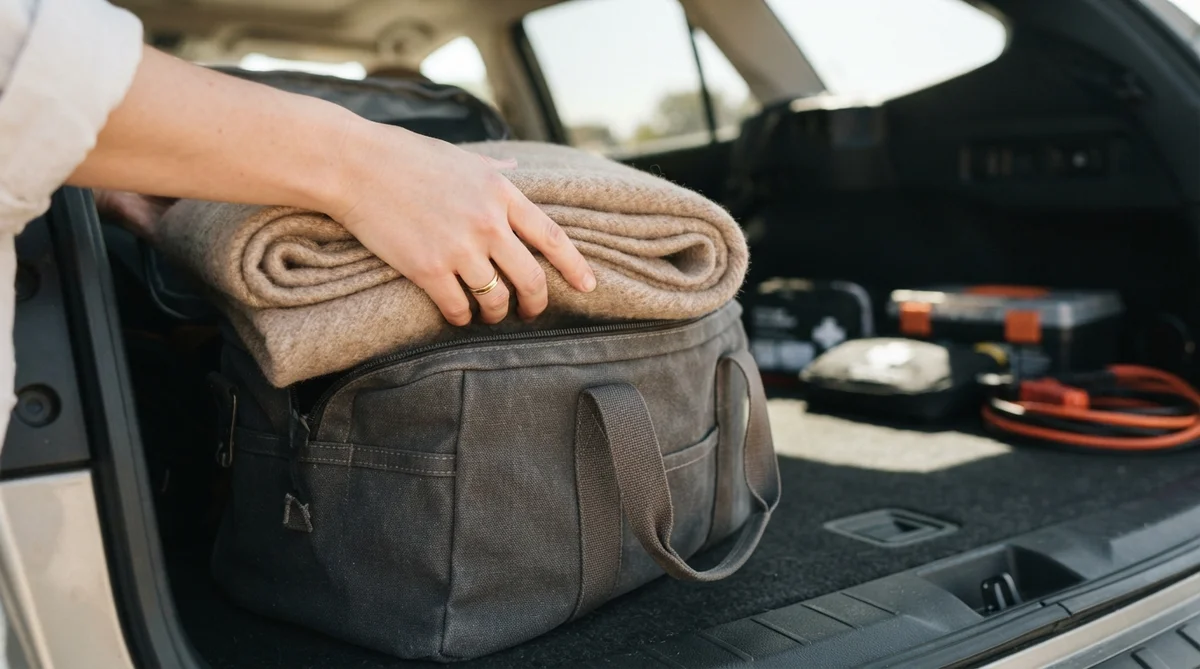
- Use a Durable Cargo Container: Store your primary gear in a heavy-duty plastic bin with a locking lid or a zippered canvas bag to protect your tools from trunk moisture.
- Know What to Pack in Vehicle Glove Box: Keep high-priority items like a tire gauge, flashlight, window breaker, seatbelt cutter, and small multi-tool within arm’s reach of the driver’s seat.
- Inspect Your Gear Twice Yearly: Set calendar alerts in the spring and fall to check your battery charge levels, swap seasonal items, and replace expired food or water.
- Secure Loose Items: Use bungee cords or cargo nets to anchor your storage container, preventing heavy items from becoming dangerous projectiles during a sudden stop.