What You Need to Know
Knowing exactly how long can food sit out safely prevents foodborne illness: perishables must be refrigerated within 2 hours to avoid rapid bacterial growth.
- The 2-hour limit represents the absolute maximum time perishable items can safely remain unrefrigerated.
- Bacteria multiply rapidly in the temperature danger zone, which spans from 40 degrees Fahrenheit to 140 degrees Fahrenheit.
- In hot environments above 90 degrees Fahrenheit, this safe window drops to just 1 hour.
- Leaving food out overnight violates all food safety rules and requires discarding the items immediately, even if they look and smell fine.
The primary variable that dictates safety is the surrounding room temperature, which can accelerate pathogen growth in warmer months.
How Long Can Food Sit Out? Understanding the 2-Hour Rule
Cooked food can safely sit out at room temperature for a maximum of 2 hours. According to the United States Department of Agriculture (USDA) food safety guidelines, bacteria double in number every 20 minutes when left unrefrigerated. Once this two-hour window closes, the risk of foodborne illness increases dramatically.
This standard applies to nearly all perishable items, including cooked meats, poultry, seafood, eggs, dairy, and cut fruits or vegetables. Many people mistakenly think that reheating food after it has sat out for hours makes it safe. However, some bacteria produce heat-stable toxins that cannot be destroyed by cooking temperatures.
To keep your family safe, track the time your meals spend on the dining table. If you are hosting a gathering, write down the time you served the food so you know exactly when to pack it away.
What Is the 1-Hour Exception for Hot Weather?
The safe room temperature window shrinks to just 1 hour when the ambient temperature reaches 90 degrees Fahrenheit (32.2 degrees Celsius) or higher. This exception is critical for outdoor picnics, backyard barbecues, and summer patio dining.
Warm outdoor conditions accelerate bacterial replication, turning a safe meal into a health hazard in half the normal time. The USDA Food Safety and Inspection Service (FSIS) warns that keeping food outdoors in high heat without ice or heat sources is a leading cause of summer food poisoning.
If you cannot keep cold foods chilled below 40 degrees Fahrenheit or hot foods warmed above 140 degrees Fahrenheit during a summer event, discard them after 60 minutes. It is always better to throw away questionable leftovers than to risk severe digestive illness.
Why Is the Temperature “Danger Zone” Critical?
The temperature danger zone represents the specific thermal range between 40 degrees Fahrenheit and 140 degrees Fahrenheit (4.4 to 60 degrees Celsius) where harmful bacteria thrive and multiply. Within this range, common pathogens like Salmonella, Escherichia coli, and Staphylococcus aureus grow at an alarming rate.
Managing your danger zone food safety hours is the most effective way to prevent food poisoning at home. When cooked meals sit within this temperature range, they quickly become unsafe. This is why food safety professionals emphasize rapid cooling and steady warming.
To monitor these temperatures, keep a reliable appliance thermometer in your refrigerator and a food thermometer in your kitchen. Your refrigerator must always maintain a temperature of 40 degrees Fahrenheit or below to keep bacteria in a dormant state.
Which Foods Are Most at Risk?
Time and Temperature Control for Safety (TCS) foods are high-moisture, low-acid items that provide the perfect environment for rapid bacterial growth. These foods require strict temperature management and are highly susceptible to spoilage when left on the counter.
The list of TCS foods includes the following everyday items:
- Meat and poultry: Cooked beef, chicken, turkey, pork, and any dishes containing these proteins.
- Seafood: Fish, shrimp, crab, and shellfish, which spoil exceptionally fast.
- Dairy and eggs: Milk, cheese, cream-based sauces, quiches, and cooked egg dishes.
- Cooked starches: Rice, pasta, baked potatoes, and quinoa, which can harbor Bacillus cereus spores.
- Cut produce: Sliced melons, tomatoes, and leafy salad greens that have been pre-washed and chopped.
For these high-risk options, the standard leaving food out overnight rules apply: if they remain unrefrigerated for more than 2 hours (or 1 hour in high heat), you must discard them immediately. Never taste-test these foods to check if they are still good, as bacteria can be present in dangerous amounts without changing the smell, appearance, or flavor.
What Are the Best Practices for Cooling and Storing Leftovers?
To store cooked food safely, you must cool it down as quickly as possible to get it past the temperature danger zone. Placing a large, steaming pot of hot food directly into your refrigerator can raise the internal fridge temperature, putting other stored foods at risk.
Instead, follow these efficient cooling and storage steps:
- Divide food into shallow containers: Small, flat containers allow heat to escape rapidly compared to deep pots.
- Cut large portions of meat: Slice roasts or whole turkeys into smaller pieces before refrigerating.
- Use an ice bath for rapid cooling: Place hot pots in a sink filled with ice water to drop the temperature quickly.
- Leave container lids slightly cracked: Let steam escape for the first hour in the fridge, then seal the lids tightly.
Properly cooled leftovers will stay safe in a refrigerator set at 40 degrees Fahrenheit or lower for 3 to 4 days. If you do not plan to eat the food within this timeframe, wrap it tightly and store it in the freezer for up to 3 to 4 months for peak quality.
How Do You Safely Reheat Leftovers?
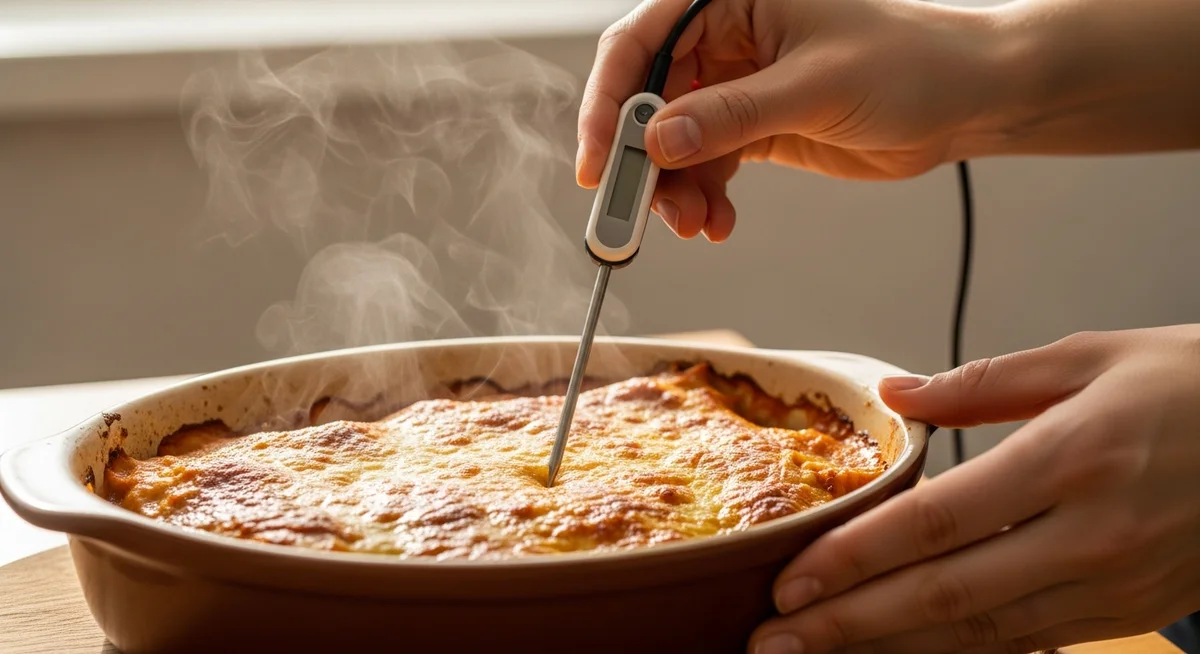
You must reheat leftovers to an internal temperature of at least 165 degrees Fahrenheit (73.9 degrees Celsius) to destroy any bacteria that grew while the food cooled. Use a digital food thermometer to verify this temperature at the thickest part of the food.
This reheating rule is crucial because it addresses the core issue of how long can cooked food stay at room temp. If your food sat out for less than 2 hours, reheating it to this high threshold makes it perfectly safe to eat.
When using a microwave, cover the dish to retain moisture and stir the food halfway through the heating process to eliminate cold spots. For soups and sauces, bring them to a rolling boil on the stovetop before serving. Never use slow cookers or chafing dishes to reheat food, as these appliances heat food too slowly, keeping it in the danger zone for too long.
What Are the Common Food Safety Myths Debunked?
Several dangerous misconceptions persist about food storage and room-temperature safety, often leading to accidental food poisoning. Unmasking these myths helps protect your household from preventable illnesses.
Understanding the reality behind these common assumptions is vital:
- Myth: The sniff test is reliable. Reality: Pathogenic bacteria that cause food poisoning do not affect the taste, smell, or appearance of food. Spoilage bacteria cause bad odors, but harmful pathogens are completely invisible and scentless.
- Myth: Reheating food makes overnight leftovers safe. Reality: While heat kills live bacteria, it does not destroy the heat-resistant toxins left behind by pathogens like Staphylococcus aureus. Once these toxins are present, no amount of boiling or baking will make the food safe.
- Myth: Mayonnaise is the main cause of picnic food poisoning. Reality: Commercial mayonnaise is acidic, which actually slows bacterial growth. The real culprits are the low-acid ingredients mixed with it, such as potatoes, chicken, pasta, and eggs.
- Myth: Acidic or salty foods can sit out indefinitely. Reality: While high salt or acid levels slow down spoilage, cooked dishes still contain enough moisture and nutrients for bacteria to grow. The leaving food out overnight rules still apply to cooked marinades, salted meats, and tomato sauces.
If you ever find yourself wondering whether an item left on the counter is safe, remember the golden rule of home food safety: when in doubt, throw it out. Protecting your health is always worth the cost of a discarded meal.