WHAT YOU NEED TO KNOW
You can successfully remove old stains from carpet by rehydrating the set-in residue before applying target treatments like enzyme solutions or mild acids.
- 90% of dried household spots respond to basic household remedies including dish soap, baking soda, and 3% hydrogen peroxide.
- Biological stains require an enzymatic dwell time of 12 to 24 hours to break down organic proteins completely.
- Guidelines from the Institute of Inspection, Cleaning and Restoration Certification (IICRC) state that you should never scrub carpet yarns, as mechanical friction untwists fibers permanently.
Your success depends on identifying whether the stain is water-based, synthetic, or oil-based before choosing a chemical agent.
How to Rehydrate and Prepare Set-In Carpet Stains
You must rehydrate a dry carpet stain before chemical agents can dissolve the bound pigments. Dried spills bond tightly with synthetic nylon or polyester backing over time, creating a hardened crust that repels liquid cleaners.
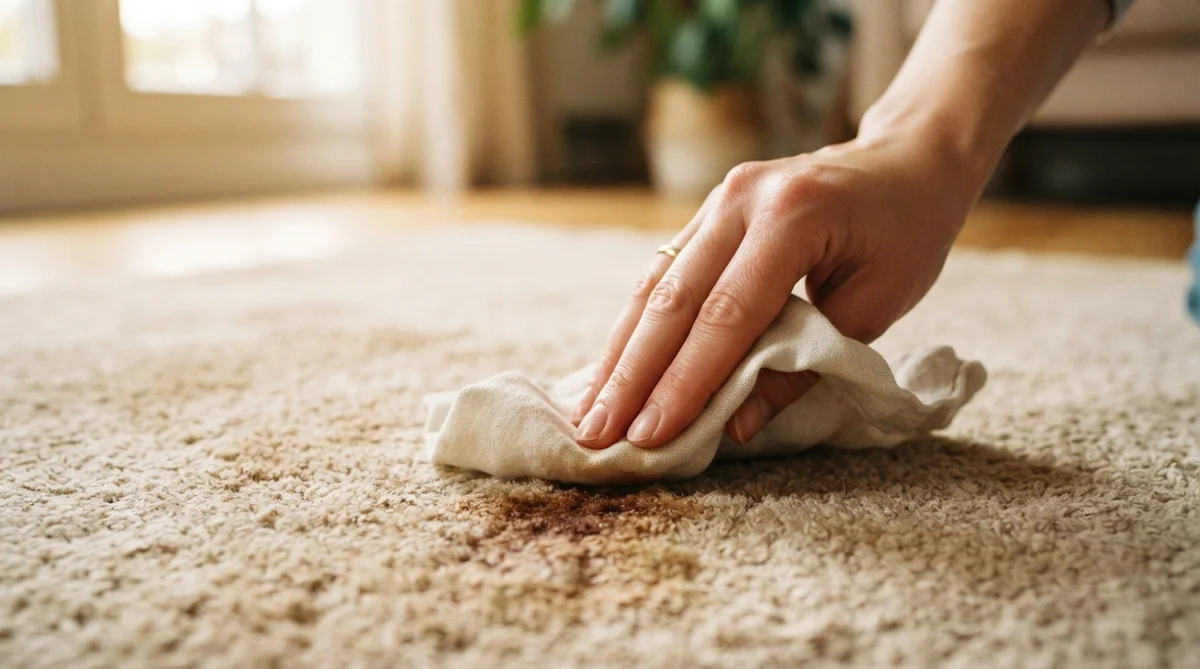
To prepare the site, place a warm, damp microfiber cloth directly over the spot for 15 to 20 minutes. This gentle steaming action softens the crystalized residue without spreading pigment into surrounding clean fibers. Press down lightly with a heavy glass bowl to ensure full contact across the affected area.
Once the spot feels tacky under your fingers, blot the top layer with a clean white paper towel to lift loose surface debris. Vacuum the dry outer edges surrounding the spot using a hose attachment to clear loose dirt that might create a mud ring during cleaning.
Best DIY Solutions to Remove Old Stains from Carpet
Creating a reliable diy dried spot remover at home saves money while protecting tufted carpet backing from harsh industrial solvents. Match these simple chemical combinations to the underlying cause of the mark for effective, low-toxicity carpet restoration.
Baking Soda and Vinegar Solution
Baking soda acts as a mild abrasive and odor absorber, while white distilled vinegar breaks down mineral deposits through acidic reaction.
- Sprinkle 2 tablespoons of pure baking soda directly over the damp stain to cover it completely.
- Mix 1 cup of warm water with 1 cup of white vinegar in a spray bottle.
- Mist the vinegar mixture onto the baking soda until light foaming occurs.
- Let the bubbling action work for 30 minutes, then blot dry with a fresh towel.
Dish Soap and Warm Water Method
Clear liquid dish soap breaks surface tension and dissolves light grease marks without stripping carpet dyes.
- Combine 1/4 teaspoon of clear dish soap with 1 cup of lukewarm water in a bowl.
- Dip a clean cloth into the mixture and press it onto the carpet stain from the outer edges inward.
- Blot repeatedly until no more color transfers to your cleaning cloth.
- Rinse by dabbing the area with a damp cloth soaked only in clear water to eliminate soap residue.
Hydrogen Peroxide and Water Treatment
A standard 3% hydrogen peroxide solution acts as a mild, color-safe oxygen bleach on organic stains like juice or dye-free drinks.
- Mix 1/2 cup of 3% hydrogen peroxide with 1 tablespoon of clear dish liquid.
- Apply the mixture to light-colored carpets using a soft-bristled brush or sponge.
- Allow the liquid to sit for 15 minutes away from direct sunlight.
- Blot thoroughly with a dry towel until the carpet feels barely damp.
Diluted Ammonia Solution (For Non-Wool Carpets)
Ammonia cuts through alkaline stains and deep protein residue on synthetic fibers like nylon and polyester.
- Mix 1 tablespoon of household clear ammonia with 1/2 cup of warm water.
- Apply a small amount directly to synthetic carpet fibers using a spray bottle.
- Blot the area gently using a white cloth to transfer loosened pigments.
- Neutralize the spot immediately afterward by blotting with a 1:1 solution of white vinegar and water.
Club Soda and Salt Method
Carbonation in fresh club soda lifts deeply embedded dyes upward through effervescent pressure, while table salt absorbs wet pigment from underlying padding. Pour 3 tablespoons of carbonated club soda directly onto the spot and let it bubble for 5 minutes. Dust a generous layer of fine table salt over the moist area, let it dry overnight into a hard crust, and vacuum the crystal residue away completely.
Borax Paste Stain Removal
Borax provides active sodium tetraborate to neutralize stubborn acids and lift old grime without damaging carpet backings. Mix 1/4 cup of powdered borax with 2 tablespoons of warm water to create a thick, spreadable paste. Coat the set-in mark evenly, allow the paste to dry into a brittle shell for 2 hours, then vacuum the dried powder out of the carpet pile.
How to Treat Specific Types of Old Stains
Different chemical compounds demand targeted treatment formulas when dealing with stubborn old carpet stain removal. Selecting the wrong solution can set dyes permanently into carpet yarns.
Set-In Pet Stains and Odors
Old pet accidents contain dried uric acid crystals that resist standard soap solutions and require specialized enzymatic breakdown.
- Saturate the area thoroughly with an enzymatic cleaner to reach the underlying carpet pad.
- Cover the damp spot with a plastic damp bowl or wrap for 12 to 24 hours to prevent premature evaporation.
- Blot up excess moisture with clean paper towels once the dwell time completes.
- Dust the dry area with baking soda to neutralize remaining odors, then vacuum after 4 hours.
Old Red Wine and Juice Spills
Fruit juice and red wine contain intense tannins that lock tightly onto carpet fibers when allowed to dry.
- Douse the dried stain lightly with cold club soda to rehydrate set tannins.
- Apply a mixture of 1 part dish soap and 2 parts hydrogen peroxide directly to light carpet fibers.
- Blot continuously with a clean white cloth, moving to clean sections of the rag as pigment lifts.
- Rinse with a damp cloth dipped in cold water to strip remaining sugars.
Dried Coffee and Tea Stains
Coffee stains combine organic tannins with heat-set oils that discolor lighter carpet pile quickly.
- Blot the dried spot with a solution of 1 tablespoon white vinegar and 2 cups warm water.
- Work from the outer border toward the center to avoid enlarging the stain perimeter.
- Apply a drop of clear liquid dish soap if the coffee contained milk or creamer fats.
- Rinse the carpet thoroughly with cool tap water and press dry with clean towels.
Stubborn Oil and Grease Spots
Grease, motor oil, and butter repel water-based cleaners and must be broken down with solvent action.
- Sprinkle cornstarch or baking soda heavily over the oily area to draw out free grease.
- Let the powder absorb surface oils for 30 minutes, then vacuum the residue thoroughly.
- Apply a small amount of rubbing alcohol to a clean cloth and dab the remaining spot gently.
- Blot with a warm dish soap solution to lift final grease tracks from synthetic yarns.
Best Commercial Carpet Stain Removers
When domestic ingredients fail to yield results, commercial formulations provide targeted chemical power. Commercial products utilize specialized surfactants, oxygen oxidizers, or live enzyme cultures to lift aged pigments safely.
Commercial Cleaner Comparison: Features at a Glance
| Cleaner Type | Best Use Case | Active Ingredient | Average Cost |
|---|---|---|---|
| Enzyme Spray | Pet urine, feces, blood | Bacterial enzymes | $12 – $18 |
| Oxidizing Spotter | Red wine, juice, coffee | Hydrogen peroxide derivative | $10 – $15 |
| Solvent Degreaser | Oil, grease, shoe polish | Citrus terpenes / alcohol | $14 – $22 |
| Foaming Aerosol | High-traffic soil, mud | Anionic surfactants | $8 – $14 |
DIY Methods vs. Commercial Cleaners: Pros and Cons
Understanding the tradeoffs between homemade formulas and store-bought carpet treatments helps you pick the right tool for your flooring.
- DIY Pros: Low cost, non-toxic around children, made instantly from kitchen pantry items.
- DIY Cons: Requires repeated applications, may fail on dark synthetic dyes or heavy grease.
- Commercial Pros: Fast-acting, specially formulated for deep pad penetration, breaks down complex organic proteins.
- Commercial Cons: Higher cost, strong chemical scents, potential to leave tacky residues if unrinsed.
Key Features to Look for When Buying a Carpet Stain Remover
Evaluating commercial labels ensures you buy a formula suited to your carpet’s specific fiber construction.
- CRI Seal of Approval: Look for testing verification from the Carpet and Rug Institute (CRI) to prevent fiber damage.
- Woolsafe Certification: Essential if treating natural wool fibers, as high-pH chemicals dissolve wool proteins.
- No-Rinse Formulas: Prevents sticky soap films that attract fresh dirt to treated spots over time.
- Targeted Chemistry: Choose enzymatic products for bio-stains and solvent spotters for oil or synthetic dyes.
When to Rent a Steam Cleaner or Call a Professional
Large or deeply set-in spots sometimes extend past carpet fibers into underlying padding and subflooring. Knowing when to escalate treatment prevents mold growth and permanent fiber discoloration.
- Rent a commercial hot-water extraction unit if set-in stains cover an area larger than 1 square foot.
- Call a certified professional cleaner if dealing with antique wool, silk blends, or delicate natural jute fibers.
- Seek professional extraction if pet urine has soaked deep into subflooring, causing recurring odors in high humidity.
- Outsource the task when home spot treatments leave gray water rings or severe fiber distortion.