WHAT YOU NEED TO KNOW
Staining your concrete patio transforms plain gray slabs into rich, custom surfaces for a fraction of the cost of slab replacement, provided you thoroughly clean and etch the surface before applying color.
- Water-based acrylic stains dry in 2 to 4 hours and offer consistent opaque or semi-transparent colors, whereas acid stains react chemically over 4 to 8 hours to create mottled, stone-like variations.
- Surface preparation accounts for 80% of overall project success, requiring deep cleaning and porosity testing to ensure stain penetration.
- DIY material costs average $0.35 to $1.50 per square foot, which includes prep chemicals, stain, and clear protective sealer.
Unsealed or previously coated concrete will prevent proper adhesion, making porosity testing the critical deciding factor before you begin.
Types of Concrete Stains for Outdoor Surfaces
Choosing the right stain depends on whether you prefer a natural stone appearance with varied hues or a predictable, uniform color palette. Acid-based stains react chemically with the free lime in cured concrete, producing earthy tones that will never peel or chip. Water-based stains function like ultra-thin acrylic dyes, filling the concrete pores to produce vibrant, consistent colors across the entire slab.
| Stain Type | Chemical Reaction | Color Uniformity | Drying Time | Ideal Use Case |
|---|---|---|---|---|
| Acid-Based | Yes (Lime reaction) | Mottled / Variegated | 4 to 8 hours | Patios, walkways, driveways seeking a marble or slate finish |
| Water-Based | No (Pigment penetration) | Uniform / Consistent | 2 to 4 hours | Covering discolored slabs, bold designs, quick turnarounds |
Acid-Based vs. Water-Based Concrete Stains
Acid stains contain inorganic metallic salts dissolved in a mild acid solution. When sprayed onto raw concrete, the acid light-etches the surface while the salts react with hydrated lime. According to testing by Consumer Reports, acid stains yield exceptional fade resistance under intense ultraviolet light, though color choices remain limited to earth tones like terracotta, brown, tan, and soft green.
Water-based acrylic formulas contain no harsh acids and emit minimal fumes, making them easier to handle for home DIY projects. They offer a palette ranging from deep blues and bright reds to charcoal shades. Because they do not rely on chemical reactions, water-based stains deliver predictable colors that closely match the manufacturer sample swatch.
Essential Tools and Supplies
Gathering all equipment prior to starting prevents hard lap lines on the concrete while stain dries. Safety gear is mandatory when working with etching acids and solvent-based sealers.
- All-plastic pump sprayer (without metal parts inside the nozzle assembly)
- Stiff-bristle push broom or synthetic scrub brush
- Heavy-duty plastic sheeting and blue painter’s tape
- Concrete cleaner, degreaser, and etching agent
- Concrete stain (acid or water-based acrylic)
- Baking soda or specialized neutralizer (for acid stains only)
- Clear outdoor concrete sealer (acrylic or polyurethane)
- Safety goggles, chemical-resistant rubber gloves, and a NIOSH-approved respirator mask
Surface Preparation: Is Your Concrete Ready?
Concrete must be clean, dry, and structurally sound before applying any colored finish. The Iowa State University Extension and Outreach emphasizes that penetrating stains cannot adhere to surfaces contaminated with grease, curing compounds, or existing clear sealers. Skipping prep steps leads directly to surface flaking within 6 to 12 months.
How to Test Concrete Porosity and Existing Sealers
Drip 10 drops of clean water onto three different areas of your outdoor slab. If the water absorbs into the slab within 5 minutes and turns the concrete dark, your surface is porous and ready for stain. If the water beads up or sits on top after 10 minutes, an existing sealer or heavy sealant is present, which must be stripped mechanically or chemically before staining.
Cleaning Concrete and Removing Efflorescence
Efflorescence appears as a white, powdery salt deposit on concrete surfaces exposed to ground moisture. Brush away dry salts with a wire brush before applying a heavy-duty concrete cleaner and degreaser across the entire slab.
- Scrub heavy oil spots using an undiluted degreaser and a stiff-bristle brush.
- Rinse the floor with a 2000-PSI pressure washer to remove pulverized grime and soap residue.
- Allow the slab to dry for at least 24 hours until moisture evaporates completely.
Repairing Cracks and Etching the Surface
Fill cracks wider than 0.125 inches using an exterior elastomeric concrete filler, smoothing it flush with a trowel. Next, apply a concrete etching solution or a diluted muriatic acid mixture to open closed pores. Etching prepares smooth troweled surfaces until they feel like 150-grit sandpaper, ensuring deep stain penetration.
How to Stain Concrete Patios: Step-by-Step Guide
This outdoor concrete stain tutorial walks you through applying either product type safely. Follow weather forecasts to ensure outdoor temperatures stay between 50°F and 85°F without rain projected for 48 hours.
Step 1: Protect Surrounding Landscaping and Structure
Mask house siding, patio doors, and stone columns with heavy plastic sheeting and painter’s tape up to 24 inches off the slab. Wet down adjacent grass beds and shrubbery with fresh water, then drape them in light plastic drop cloths to shield foliage from overspray drift.
Step 2: Apply the Concrete Stain
Pour your strained liquid stain into an all-plastic pump sprayer. Hold the nozzle tip 12 to 18 inches above the surface, spraying in continuous circular motions to maintain a continuous wet edge across work sections. Have a helper follow immediately behind with a broom or circular sponge to work water-based stain into small micro-pores, preventing puddle pools.
Step 3: Neutralize and Rinse (Acid Stains Only)
Skip this step if using a water-based product. If applying acid stain, allow it to react on the concrete for 4 to 8 hours. Mix 1 cup of baking soda per 1 gallon of clean water in a bucket, then scrub the solution across the floor using a broom to neutralize the residual acid. Scrub thoroughly and rinse with clean water until the rinse runoff stays clear, then let the slab dry for 24 hours.
Step 4: Apply a Clear Outdoor Sealer
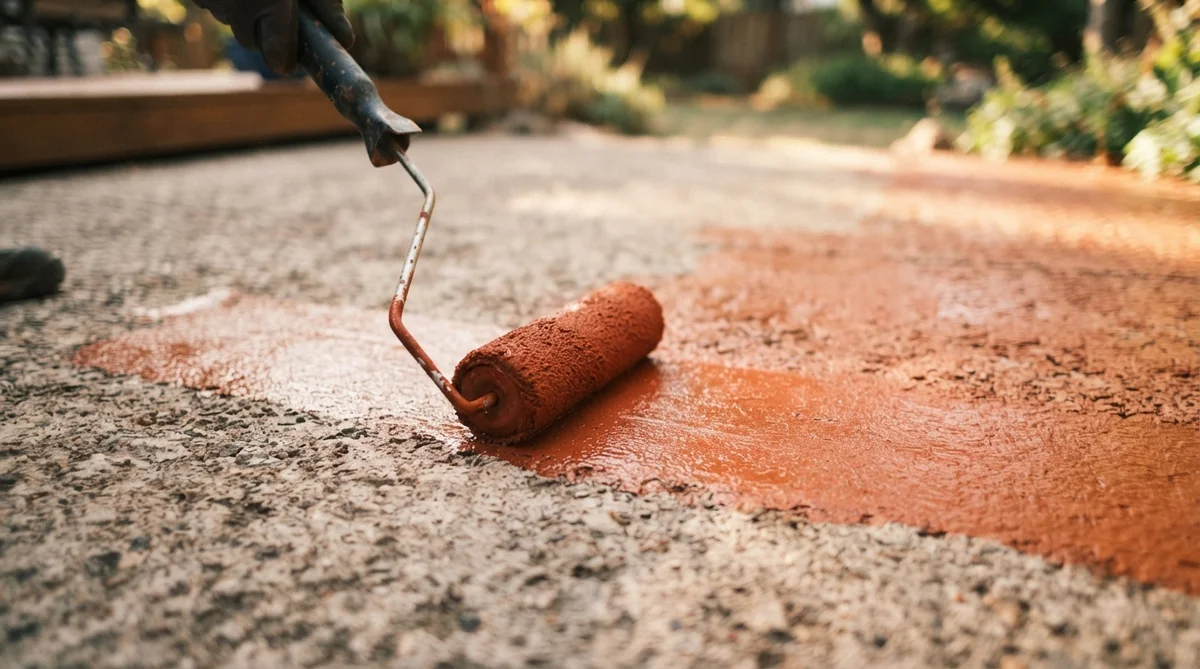
Protect your color investment by applying two thin coats of clear exterior concrete sealer using a medium-nap roller or pump sprayer. Allow 4 hours of dry time between coats. Sealing enhances color depth and protects the finish from foot traffic abrasion and sun exposure.
Concrete Patio and Driveway Stain Cost Breakdown
Staining concrete patios costs significantly less than laying stone pavers or pouring fresh concrete. When learning how to stain driveways or staining concrete garage floors, material needs scale primarily by total square footage.
| Project Scope | DIY Cost per Sq. Ft. | Pro Cost per Sq. Ft. | Key Expenses Included |
|---|---|---|---|
| Patio (200 sq. ft.) | $0.45 to $1.20 | $3.00 to $7.00 | Cleaner, stain, roller supplies, clear coat |
| Driveway (600 sq. ft.) | $0.35 to $0.90 | $2.50 to $6.00 | Bulk etcher, heavy-duty sealer, sprayers |
| Garage Floor (400 sq. ft.) | $0.50 to $1.50 | $4.00 to $8.00 | Oil degreaser, non-slip additive, clear sealer |
How Long Does Outdoor Concrete Stain Last?
Because acid stain forms an integral chemical bond within the concrete matrix, the color itself lasts as long as the concrete surface remains intact. Water-based stains sit within the top pore layers and require periodic resealing to prevent surface fading.
| Stain System | Average Color Lifespan | Resealing Frequency | Primary Wear Factor |
|---|---|---|---|
| Acid-Based (Sealer Protected) | 10 to 15+ years | Every 3 to 5 years | Heavy vehicular traffic, abrasive grit |
| Water-Based (Sealer Protected) | 5 to 8 years | Every 2 to 3 years | Direct sun exposure, standing water |
| Unsealed Stain (Any type) | 1 to 2 years | N/A (Fades rapidly) | Weathering, UV degradation, rain erosion |
Maintenance Tips for Stained Outdoor Concrete
Regular maintenance extends the lifespan of your stained patio finish and preserves its sheen without aggressive chemical treatments.
- Sweep leaves, dirt, and sand weekly using a soft-bristle broom to eliminate surface abrasion.
- Clean spills, grease, or bird droppings promptly using pH-neutral soap mixed with warm water.
- Avoid using salt or chemical deicers on stained outdoor concrete during freezing winter months.
- Reapply a single coat of compatible clear acrylic sealer every 3 years to maintain protection against moisture intrusion.
Frequently Asked Questions
- Can you use wood stain on outdoor concrete patios?
No, wood stains rely on organic resins designed to absorb into cellulose fibers. They will not bond properly to concrete minerals and will peel away quickly when exposed to moisture or foot traffic. - Can you stain old or cracked concrete?
Yes, provided the concrete is structurally sound and thoroughly cleaned. Existing hairline cracks and aged surface variations add character to acid stain finishes, creating a rustic stone appearance. - Is staining concrete garage floors different from staining patios?
The basic prep and application techniques remain identical. However, garage floors require hot-tire resistant sealers with non-slip silica sand additives mixed into the topcoat for safety.