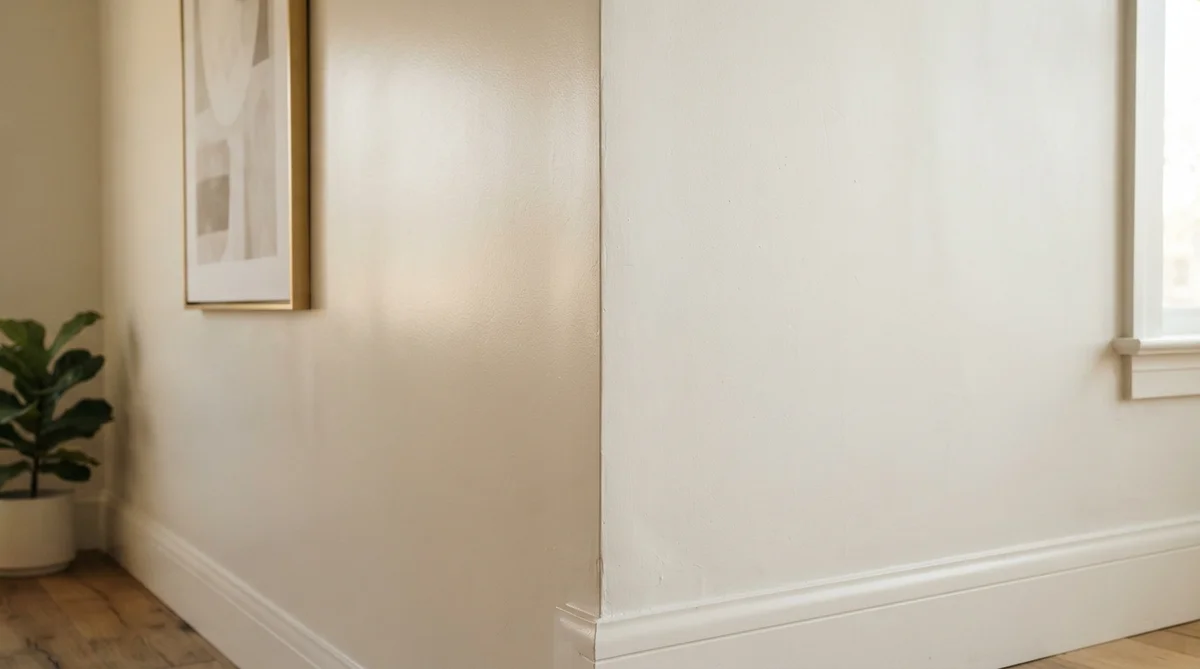
AT A GLANCE
>
This practical paint sheen guide breaks down how to select the right finish by balancing durability, scrub resistance, and visual reflection based on room traffic and surface condition.
- 0% to 10% gloss levels absorb ambient light to conceal drywall patches, making flat finishes ideal for low-traffic ceilings.
- 10% to 25% gloss ratings in eggshell and satin provide wipeable durability for active living spaces and adult bedrooms.
- 35% to 85% gloss finishes offer strong moisture resistance, making them ideal for trim, cabinetry, and bathroom walls.
Higher gloss levels provide maximum cleanability, but they also highlight underlying wall dents under direct overhead light.
Understanding Paint Sheen and Gloss
What Is Paint Sheen?
Paint sheen refers to the amount of light reflected off a dried paint surface. Manufacturers measure sheen by bouncing light off a surface at specific angles, usually 60 degrees or 85 degrees. Higher resin concentrations create a smoother, tighter chemical film that reflects light, while higher pigment ratios scatter light rays for a duller appearance.
Understanding gloss sheen differences helps you select coatings that withstand everyday living. A shiny finish provides tight moisture resistance, while a lower sheen finish softens incoming natural light. Balancing visual texture with maintenance demands ensures your painted walls look sharp and remain easy to clean.
The Paint Sheen Spectrum
| Sheen Level | Reflectivity Range | Key Characteristics | Best Applications |
|---|---|---|---|
| Flat / Matte | 0% to 10% | Non-reflective, hides wall flaws, low washability | Ceilings, low-traffic adult bedrooms |
| Eggshell | 10% to 25% | Soft luster, conceals minor patches, washable | Living rooms, dining rooms, home offices |
| Satin | 25% to 35% | Pearl finish, scrubbable, moisture resistant | Hallways, kitchens, kids' bedrooms |
| Semi-Gloss | 35% to 70% | Radiant shine, high water resistance, durable | Bathrooms, trim work, doors, cabinets |
| High Gloss | 70% to 90%+ | Glass-like shine, extreme toughness, reveals imperfections | Front doors, decorative trim, custom cabinetry |
Types of Paint Sheens Explained
Flat and Matte
Flat and matte paints contain minimal binder resin, reflecting little to no light across wall surfaces. Flat paint measures 0% to 5% reflectivity, while matte sits slightly higher at 5% to 10% gloss. When evaluating eggshell vs satin vs matte paint, matte provides rich color depth while masking drywall tape seams and patched nail holes.
- Reflectivity: 0% to 10% gloss output measured at an 85-degree angle.
- Durability: Scuffs easily under scrubbing, making touch-ups necessary after cleaning.
- Visual effect: Smooth, velvet-like finish that minimizes direct light glare.
Eggshell
Eggshell paint creates a soft sheen resembling the surface of a chicken egg. It provides slightly more resin binder than matte paint, giving walls added resistance to mild staining and scuffs without looking reflective.
- Reflectivity: 10% to 25% gloss rating.
- Durability: Withstands light wiping with a soft damp cloth.
- Visual effect: Subtle warmth that balances glare reduction with basic wipeability.
Satin
Satin paint delivers a gentle pearl luster with impressive durability, making it one of the most versatile choices for active homes. It holds up against moisture, finger grease, and frequent brushing in busy corridors.
- Reflectivity: 25% to 35% gloss output.
- Durability: Highly scrubbable and resistant to humidity accumulation.
- Visual effect: Soft radiance that catches ambient light gently.
Semi-Gloss
Semi-gloss paint produces a bright finish that reflects substantial light while offering a tough outer barrier. It is specifically formulated to resist water droplets, food grease, and physical contact in utility areas.
- Reflectivity: 35% to 70% gloss level.
- Durability: Withstands aggressive scrubbing with household cleaning solutions.
- Visual effect: Crisp brightness that draws subtle attention to trim and millwork.
High Gloss
High gloss finish creates a sleek shell with maximum light reflection and durability. Because of its reflective nature, underlying wall preparation must be flawless prior to application.
- Reflectivity: 70% to 90%+ gloss rating.
- Durability: Maximum resistance to stain penetration, impact, and standing water.
- Visual effect: Dramatic mirror-like sheen that highlights underlying architectural detail.
Room-by-Room Paint Sheen Guide
Matching paint finishes to specific residential spaces prevents premature wear and reduces repainting frequency. Learning how to choose paint sheen based on room function ensures your surfaces stand up to daily life.
- Living rooms: Eggshell or matte finishes absorb glare while accommodating light cleaning.
- Kitchens: Satin or semi-gloss coatings protect walls against cooking grease and steam.
- Bathrooms: Semi-gloss finishes block humidity penetration to keep moisture from sinking into drywall.
- Bedrooms: Flat or eggshell paints create a relaxing mood with soft light distribution.
Living Rooms and Bedrooms
Living rooms and adult bedrooms experience moderate foot traffic and benefit from soft, non-reflective wall surfaces. Eggshell paint offers a balanced solution, delivering surface warmth while hiding minor wall defects. Flat or matte paints work well in guest bedrooms, where minimal physical contact keeps low-sheen surfaces looking fresh for years.
Kitchens and Bathrooms
High humidity and airborne cooking residues make kitchens and bathrooms challenging environments for wall coatings. Independent testing from Consumer Reports confirms that semi-gloss and satin paints provide the moisture barrier required to prevent humidity damage. Satin works well on general kitchen walls, while semi-gloss protects bathroom surfaces exposed directly to shower vapor.
Hallways and High-Traffic Areas
Entryways, foyers, and staircases endure continuous contact from coats, bags, and pets. A satin finish gives these walls enough durability to withstand routine washing with damp sponges without dulling the paint film. Maintenance guidelines from the Penn State Extension indicate that scrub-resistant satin formulations reduce repainting frequency in active hallways by up to 40%.
Trim, Doors, and Cabinets
Baseboards, door frames, window sills, and kitchen cabinets receive heavy physical contact and require high enamel strength. Semi-gloss is the standard choice for interior trim because it resists shoe scuffs and hand oils. High-gloss finishes suit front entry doors and custom cabinetry where a crisp design accent and simple wipe-down maintenance are required.
Ceilings
Ceilings rarely experience physical contact, but they reflect light from windows and lamp fixtures. Flat paint is standard for overhead ceilings because it absorbs light rays rather than bouncing them across the room. Using higher sheen paint on a ceiling highlights drywall tape joints, plaster repairs, and minor structural blemishes.
Key Factors When Choosing a Paint Sheen
Selecting the right coating requires matching practical durability needs with visual goals. Evaluating wall texture, moisture exposure, and light sources prevents costly repainting mistakes.
- Surface condition: Flat sheens conceal patches, while glossy paints reveal drywall flaws.
- Moisture exposure: Higher resin ratios block water penetration and resist mold development.
- Lighting dynamics: Reflective finishes intensify color saturation under direct sunlight.
Wall Condition and Flaw Hiding
Smooth, newly installed drywall handles glossy paint well, while older walls with patches or heavy texture require lower sheen choices. Flat and matte paints scatter light rays in multiple directions, rendering plaster patches and nail pops far less visible. Applying semi-gloss or high-gloss paint over uneven walls amplifies every bump under natural window light.
Moisture Levels and Washability
Higher gloss paint contains a higher concentration of acrylic resin binders, creating a dense seal when cured. This tight barrier stops moisture droplets and grease splatters from penetrating the underlying drywall substrate. In spaces prone to accidental spills, higher sheen surfaces allow quick cleanup using basic microfiber towels and mild soaps.
Room Lighting and Color Perception
Light intensity changes how paint colors register on interior surfaces throughout the day. Reflective finishes bounce surrounding light, making paint colors look slightly lighter and sharper than their matte equivalents. Darker rooms with small windows benefit from satin sheens, which help bounce limited natural light deeper into dark corners.
Common Questions About Paint Sheen
Can You Paint Over High Gloss Without Sanding?
Applying fresh paint directly over high-gloss surfaces leads to poor adhesion and eventual peeling. Lightly sanding the glossy coating with 120-grit or 220-grit sandpaper creates subtle microscopic grooves that allow fresh paint to bond securely. Alternatively, applying a quality bonding primer lets low-sheen paint adhere to slick glossy trim without heavy hand sanding.
How to Fix Uneven Paint Sheen
Uneven sheen or flashing occurs when paint dries at varying speeds due to inconsistent priming or uneven roller pressure. To resolve flashing, sand the affected area flat, apply a dedicated sealer primer, and roll a uniform topcoat from wall corner to wall corner. Keeping a wet roller edge during application prevents heavy lap marks that cause shine variations.
Does Paint Sheen Affect Color Appearance?
Paint sheen directly influences how human eyes perceive color saturation and shade depth. Higher sheen finishes reflect more direct light, making paint colors appear lighter, cooler, and slightly brighter. Flat and matte sheens absorb surrounding light rays, making the exact same paint color code appear richer, deeper, and softer on the wall.